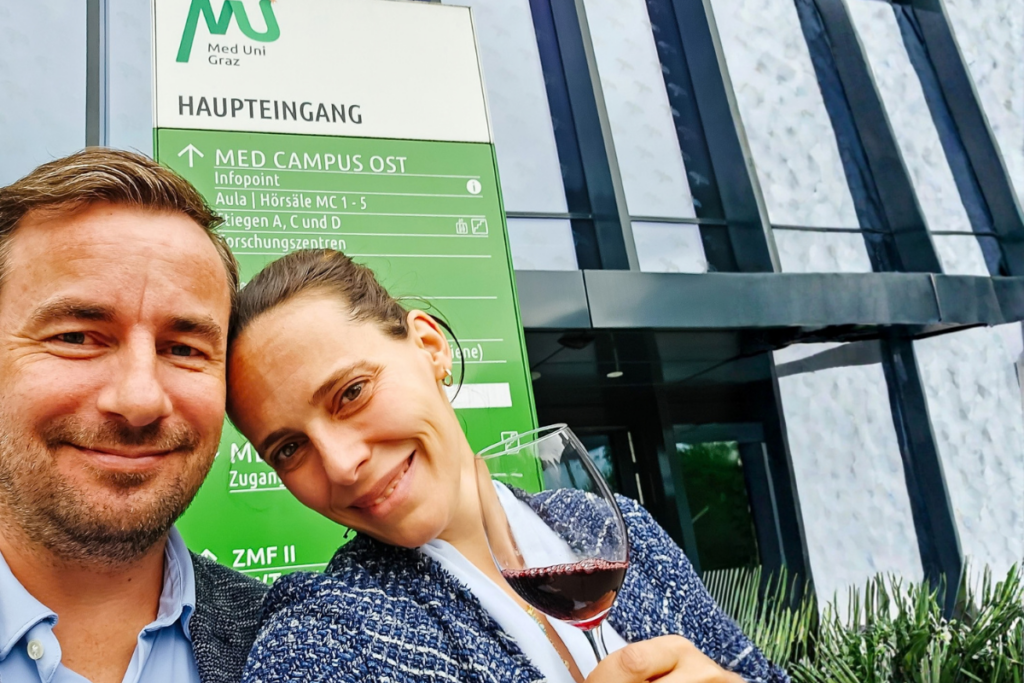
A group of renowned physicians and scientists, including Assoc. Prof. Priv.-Doz. Dr. Dirk von Lewinski from the Medical University of Graz, is currently advancing cutting-edge cardiovascular research through complex translational studies in the fields of pulmonary hypertension and heart failure. Dr. von Lewinski’s innovative clinical and scientific expertise is impressively demonstrated by the direct translation of laboratory findings into groundbreaking patient studies using human tissue.
You may be wondering: why am I reading this on the website of a family winery?
The answer lies in the fact that Dr. von Lewinski contacted us around three years ago through the founder of Wein & Gesund, Dr. Braunöck. The reason was straightforward: we were the only winery producing the exact same red wine both with and without alcohol. Based on his previous observations regarding the compounds found in red wine, he had developed a hypothesis. And so, Zeronimo Leonis Blend and Cuvée In Signo Leonis suddenly became part of a study unlike any conducted before. An exciting time for us — and especially for Katja, who studied health management as part of her academic background. Only in recent days has all of this become official, and we are delighted to share the first findings with you. But what exactly happened — and what was studied?
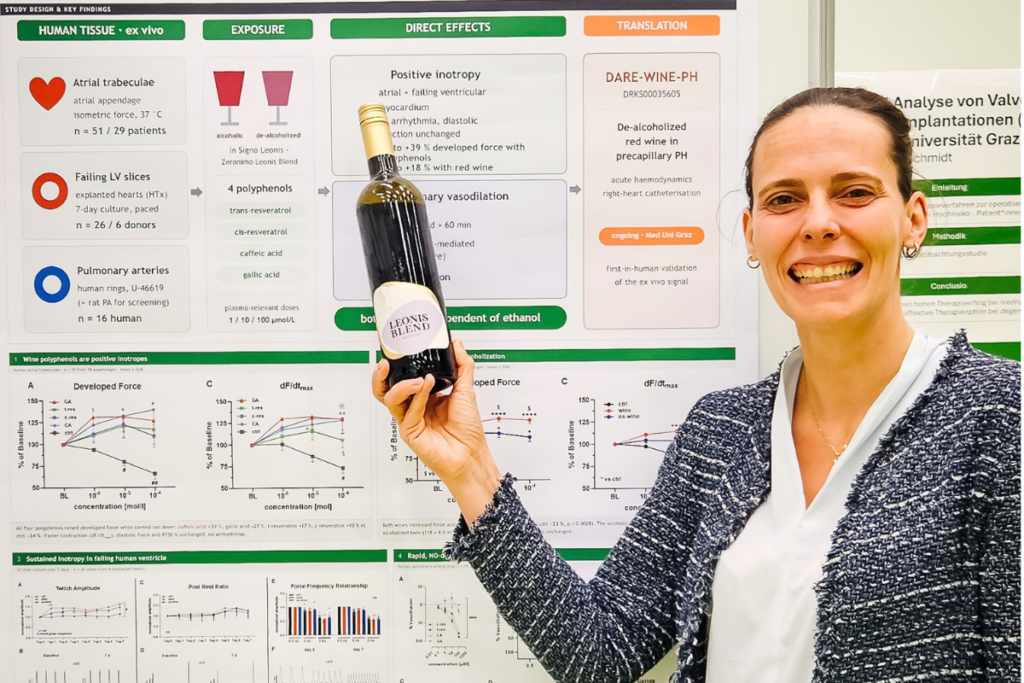
The First Findings from the Laboratory
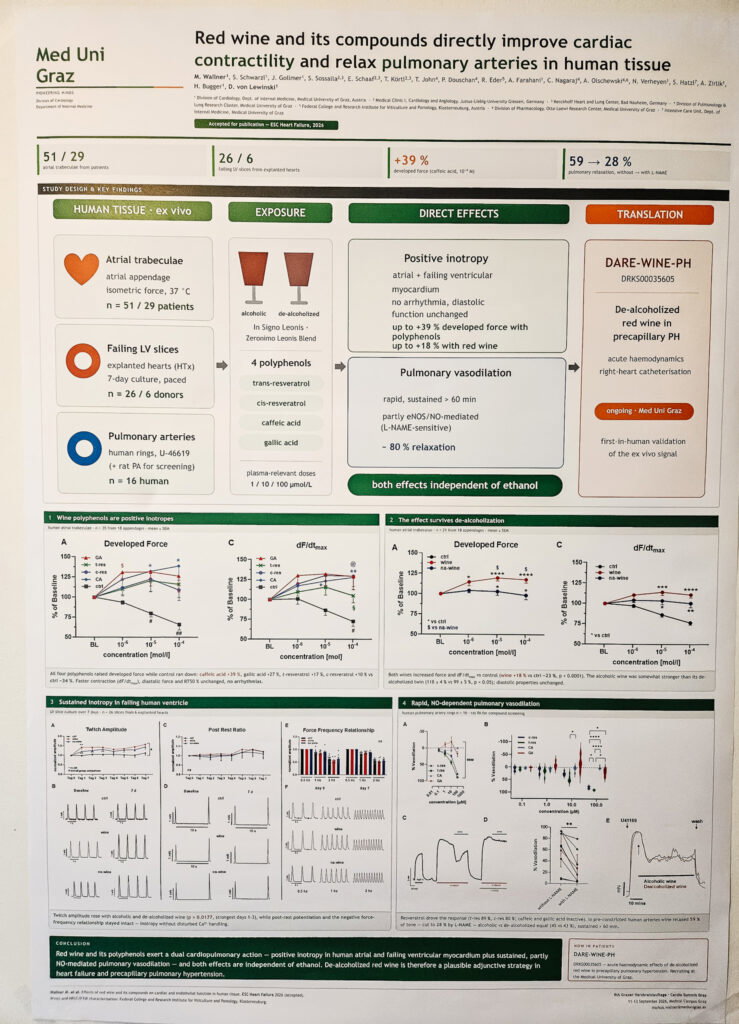
In a detailed investigation using human tissue (ex vivo) conducted last year, the researchers made some highly remarkable observations. The study examined the direct effects on cardiac output and pulmonary vessels — both from the compounds found in red wines in general, and specifically from Cuvée In Signo Leonis and Zeronimo Leonis Blend.
The results showed that the wines and their contained polyphenols produce a strong vasodilatory effect — a relaxation of the examined pulmonary vessels of up to 80% was measured. In addition, an increase in the pumping capacity of the heart muscle of up to +18% was observed with the red wine.
The most significant finding from these laboratory tests: both positive effects occurred entirely independently of the alcohol content.
From Theory to Practice: The Clinical Study
To validate these fascinating laboratory results, a clinical study called „DARE-WINE-PH” is currently underway at the Medical University of Graz, involving patients suffering from pulmonary hypertension. Prior to a catheter examination that was already scheduled, participants receive a glass of either Cuvée In Signo Leonis or Zeronimo Leonis Blend. Neither the participants nor the treating medical staff know which variant — traditional or dealcoholized — is being served (blinded study).
Using a right-heart catheter, researchers then directly measure whether the wine can actually lower blood pressure in the pulmonary vessels while simultaneously strengthening cardiac output. The scientists aim to validate in the human body whether alcohol is even necessary for these potentially beneficial effects.
An Important Note
As wine producers, it is important to us to maintain full transparency: we neither may nor wish to make any health claims regarding our wines. The results described here represent initial scientific indications from laboratory investigations using human tissue and an ongoing clinical study.
We are nonetheless enormously proud that our two wines are part of this medical study, and that we are able to make an essential contribution to this innovative research. It is yet another reminder of how fascinating and far-reaching the world of wine truly is — and how much there is still to discover, particularly in the field of non-alcoholic wines. What we have learned and experienced over the past five years of intensive engagement with dealcoholized wines has been truly remarkable.
A detailed report on this topic will soon be published in a well-known scientific journal. As soon as it becomes available — or when new published results can be shared — you will be the first to know via our newsletter and social media.
So don’t forget: subscribe to our newsletter and follow us!